
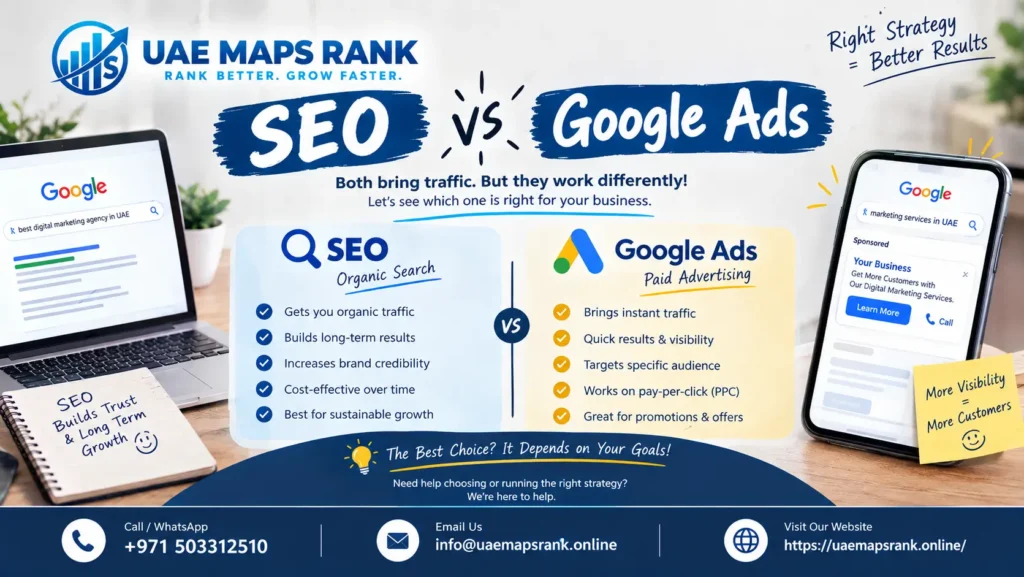
Having a website is just the beginning of creating an online presence in the cutthroat digital economy of today. Effective strategies are also required for firms to connect with prospective clients who are actively looking for goods or services. To do so, SEO vs Google Ads are two of the most popular digital marketing methods.
But which is ideal for your company? Would you like to utilise Google Ads, invest in SEO or do both? It all depends on what your company is trying to do, what market you are targeting, your budget, the competition, and how soon you are planning to do it.
In this article, we’ll review the key differences between SEO vs Google Ads, and how each technique can help you grow online.
What Is SEO?
Search Engine Optimisation (SEO) is the practice of optimising a website so it may get better rankings in search engines.
An SEO strategy can include keyword research, on-page optimization, technical SEO, content creation, internal linking, website performance improvements, link building, and local SEO.
For example, a car rental company in Dubai might want to rank for searches like “car rental Dubai” or “Dubai car rental service.” An SEO strategy can be used to make the website more relevant and visible for searches related to the services of the website.
Organic SEO traffic is different from paid advertising in that a firm does not have to pay for every single click.
What Are Google Ads?
Google Ads is a paid advertising platform owned by Google that lets businesses display advertisements to potential customers based on keywords, geography, audience, search intent, etc.
For example, a company selling desert safari excursions can set up a Google Ads campaign to target those looking for desert safari services. If you search for relevant phrases and you’re an eligible user, you may see the business advertisement in the paid advertising area of the search results.
With Google Ads, you may gain targeted visibility without waiting for your organic rankings to build.
SEO vs Google Ads: What Is the Difference?
The main distinction between SEO vs Google Ads is how businesses acquire visibility.
SEO is all about organic search exposure; Google Ads is about paid search advertising.
Most people consider SEO a long-term approach because it might take time to improve organic visibility, optimise content, make technological upgrades, and create authority.
Google Ads provides paid visibility significantly faster,r but the campaign needs an advertising budget. The paid traffic from those initiatives usually ends when the advertising does.
How Long Does SEO Take to Show Results?
SEO is not normally an overnight process. The time necessary to observe substantial results might vary depending on numerous factors, including:
Age and Authority of Website
- Competition on keywords
- Industry
- Content quality.
- SEO technical
- Backlink profile
- Local adversary
- Search Purpose
Less competitive keywords can show up sooner, whereas the most competitive search terms can take much longer and require a lot of effort.
For this reason, businesses should normally think of SEO as a long-term investment, not as a fast fix for visitors.
How Quickly Can Google Ads Generate Traffic?
Google Ads can begin driving paid traffic quickly after a campaign becomes qualified for ad serving.
However, launching a campaign does not automatically guarantee profitable results. Keyword selection, bidding strategy, ad relevance, landing page quality, competition, targeting, budget and conversion rates can influence performance.
Successful Google Ads campaigns need to be constantly monitored and optimised.
SEO Cost vs Google Ads Cost
The cost structure of SEO vs Google Ads is different.
With SEO, businesses may invest in services such as content creation, technical optimization, keyword research, local SEO, link building, and ongoing website improvements.
With Google Ads, businesses set an advertising budget and pay according to the campaign’s chosen bidding and charging model. Costs can vary significantly depending on the industry, keywords, location, competition, and campaign settings.
There is no universal SEO or Google Ads budget that works for every business. The right investment depends on the company’s objectives and market.
Benefits of SEO
A well-planned SEO strategy can provide several long-term benefits:
- Improve organic search visibility
- Attract relevant website visitors
- Build long-term online presence
- Increase visibility for valuable search terms
- Support content marketing
- Improve website structure and usability
- Strengthen local search visibility
For local businesses, local SEO can also help improve visibility for searches connected to a specific location.
Benefits of Google Ads
Google Ads provides businesses with a way to reach potential customers through targeted paid advertising.
Some potential benefits include:
- Faster access to paid search visibility
- Keyword and audience targeting
- Location-based targeting
- Flexible campaign budgets
- Measurable campaign performance
- Ability to test different advertisements
- Ability to direct users to specific landing pages
Google Ads can be particularly useful when a business wants to promote a specific service, product, seasonal offer, or campaign.
SEO or Google Ads: Which One Should You Choose?
There is no single answer that applies to every business.
If your primary goal is to build long-term organic search visibility, SEO may be an important part of your digital marketing strategy.
If your goal is to generate targeted paid traffic quickly, Google Ads may be worth considering.
Your business model also matters. A local service business, e-commerce store, SaaS company, hotel, restaurant, or tourism company may require different marketing approaches.
Before choosing a strategy, consider your:
- Business objectives
- Target audience
- Marketing budget
- Competition
- Customer buying journey
- Target locations
- Expected timeframe
- Conversion goals
Can You Use SEO vs Google Ads Together?
Yes. SEO vs Google Ads aren’t mutually exclusive methods.
Many businesses use both channels as part of a broader digital marketing plan. Google Ads can provide paid visibility while the business continues developing its organic search presence through SEO.
For example, a company could use Google Ads to promote important services while simultaneously creating optimized service pages and helpful blog content to build organic visibility.
Using both channels can also provide different types of performance data that businesses can use when refining their digital marketing strategy.
Final Thoughts
The option of going for SEO vs Google Ads depends on your business goals and is not a choice between the two channels.
SEO is building long-term organic presence in search. Google Ads is paid advertising to specific audiences. Both approaches offer different benefits, costs, timetables and requirements.
SEO could be the major priority for certain firms. Some organisations may utilise both to build a wider search marketing plan, and others may gain from Google Ads.
The most effective approach is to understand your audience, competition, budget, and business objectives first. Once these factors are clear, you can determine whether SEO, Google Ads, or a combination of both fits your digital marketing strategy.